
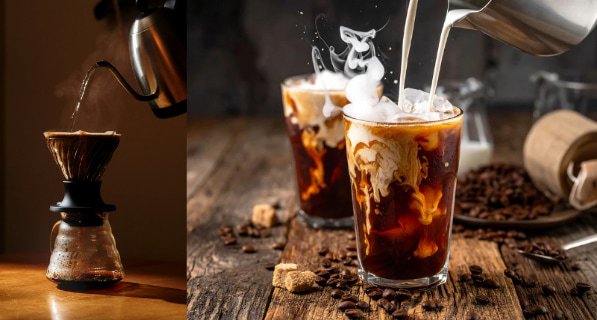
For most home kitchens, the best cold brew maker for home is the OXO Good Grips Cold Brew Coffee Maker. It drains smooth concentrate into a glass carafe with a flip of a switch and stops dripping the moment you lift the carafe away. That last detail sounds small until you’ve wiped coffee off a counter, a fridge shelf and your sleeve after pulling a stopper on a cheaper brewer.
Cold brew at home is forgiving coffee. You need coarse grounds, cold water, about half a day and a container that strains well. The equipment decides how gritty, drippy or awkward that routine feels on a Tuesday morning. A $25 mason jar works fine for one person. A family of iced-coffee drinkers will want a larger brewer with a felt filter, and someone who forgets to start a batch the night before needs a fast model.
Pick the brewer that matches how much you drink, how much fridge space you can spare and how much cleanup you’ll tolerate. Do that, and you’ll stop paying café prices for a drink you can make better yourself.
Quick picks
- Best Overall: OXO Good Grips Cold Brew Coffee Maker (clean pour, glass carafe, reusable mesh filter)
- Best Budget: County Line Kitchen Cold Brew Maker (64 oz mason jar, leak-proof flip lid, about $25)
- Best for Large Batches: Toddy Cold Brew System or Filtron (felt filters, a week or more of concentrate)
Our Top Cold Brew Maker Picks at a Glance
The OXO Good Grips is the strongest all-around choice. County Line Kitchen wins on price per ounce, Toddy and Filtron handle big weekly batches, and the Vinci Express or OXO Rapid Brewer get you a glass in minutes. The right pick comes down to whether you want cold brew concentrate to stretch through the week or ready-to-drink cold brew you pour straight over ice.
Which Maker Suits Your Coffee Routine?
Match the brewer to your habits before you look at features:
- You drink one or two glasses a day and want little fuss: The OXO Good Grips or the KitchenAid. Both store concentrate in a sealed vessel, and the KitchenAid pours from a tap right on the fridge shelf.
- You want to spend as little as possible: County Line Kitchen. A 64 oz glass jar with a steel filter covers most needs for about the price of a few café drinks.
- Your household goes through a lot of coffee: Toddy or Filtron. Both make enough concentrate to last a week or longer, and both use felt filters that leave very little sediment.
- You forget to start a batch the night before: Vinci Express (electric) or OXO Rapid Brewer (manual). Both brew in minutes.
- You keep cold brew at the office or in a bag: Takeya. The Tritan body shrugs off bumps and the lid seals tight.
- Your fridge is crowded: Hario Mizudashi or Bean Envy. Both are slim glass pitchers that slide into a door shelf.
Cold Brew Maker Comparison Table
| Maker | Type | Capacity | Filter | Body material |
|---|---|---|---|---|
| OXO Good Grips | Immersion, drain-down | 32 | Stainless mesh (paper optional) | Glass carafe, plastic brewer |
| County Line Kitchen | Immersion jar | 64 oz | Stainless mesh | Glass |
| Toddy Cold Brew System | Immersion, drain-down | Large batch | Felt + paper | Plastic brewer, glass decanter |
| Filtron | Immersion, drain-down | 1.5 L decanter | Wool felt | Plastic brewer, glass decanter |
| KitchenAid | Immersion with tap | 28 oz concentrate | Stainless steeper | Glass, stainless |
| Vinci Express | Electric circulation | 47 or 68 oz | Built-in | Borosilicate glass |
| OXO Rapid Brewer | Manual pressure | 1–3 servings | Stainless | Tritan Renew |
| Takeya Deluxe | Immersion pitcher | 1 or 2 qt | Fine mesh | Tritan plastic |
| Hario Mizudashi | Immersion pitcher | 600 or 1,000 ml | Polyester mesh | Borosilicate glass |
| Bean Envy | Immersion pitcher | Up to 4 cups | Stainless | Borosilicate glass |
Which Cold Brew Makers Are Worth Buying?
Eight brewers earn a spot. They range from a $25 glass jar to a $100 electric machine, and each one fixes a different everyday annoyance: drips, grit, slow mornings, cramped fridges or batches that run out by Wednesday.
Best Overall: OXO Good Grips Cold Brew Coffee Maker
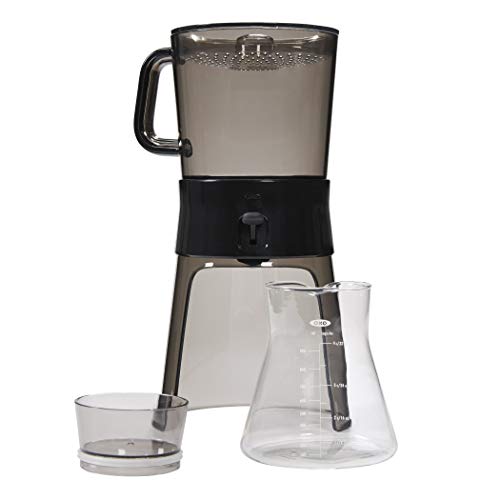
Who it’s for: Daily drinkers who want clean concentrate with no mess.
Key specs: The OXO cold brew maker comes with a 32 oz capacity, a borosilicate glass carafe and a reusable stainless mesh filter. It measures 9.5″ x 9.5″ x 14.7″.
Pros:
- The Rainmaker lid wets the grounds evenly
- Drainage stops automatically when you lift the carafe
- The sealed carafe has measurement markings
Cons:
- It has more parts than a pitcher
- The full stand takes up counter height
Verdict: The OXO cold brew coffee maker is the one to buy if drips and grit bother you more than a few extra pieces to wash. Add the optional paper filters for the cleanest cup.
Best Budget Pick: County Line Kitchen Cold Brew Maker

Who it’s for: Anyone who wants a big batch for little money.
Key specs: The County Line Kitchen cold brew maker is a 64 oz wide-mouth mason jar with a heavyweight steel filter and a flip-cap lid. It stands 10.25″ tall.
Pros:
- Dishwasher-safe parts
- The leak-resistant lid pours without dribbling
- The glass won’t hold old coffee smells
Cons:
- A full 64 oz jar is heavy
- You can’t add warm water to it
Verdict: It’s the best value here. The mesh lets a little more fine sediment through than felt does, which a quick pour through a paper filter fixes.
Best for Large Batches: Toddy Cold Brew System or Filtron


Who it’s for: Households that want one brew session a week.
Key specs: The Toddy cold brew system drains concentrate from a plastic brewer into a glass decanter through a felt filter, and you can add a paper filter underneath. The Filtron cold water coffee concentrate brewer includes a 1.5 liter decanter and a wool felt pad. Replacement pads usually come in pairs.
Pros:
- Felt leaves almost no sediment
- No power needed
- Big yield per batch
Cons:
- Felt filters need careful rinsing and eventual replacement
- Pulling the stopper gets your fingers wet
Verdict: Either one works as a large batch cold brew maker. Choose the Filtron for its included water bowl and lower price, or the Toddy if you want the more widely sold replacement parts.
Best with a Spigot: KitchenAid Cold Brew Coffee Maker
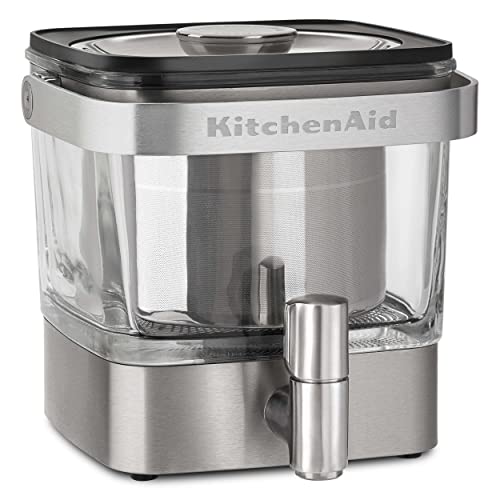
Who it’s for: People who want cold brew on tap in the fridge.
Key specs: The KitchenAid cold brew maker makes up to 28 oz of concentrate, enough for up to 14 servings. It has a stainless tap, a carrying handle and a reusable steeper with fill lines. It steeps in the fridge for at least 12 hours.
Pros:
- Pour a glass without lifting the brewer
- The sturdy handle helps when it’s full
- Glass and steel hold no odors
Cons:
- It weighs about 6.5 lb empty
- Cleaning the tap and steeper is fiddly
Verdict: The KitchenAid cold brew coffee maker is the most convenient way to serve straight from the fridge, if you have the shelf space.
Best Fast Options: Vinci Express or OXO Rapid Brewer
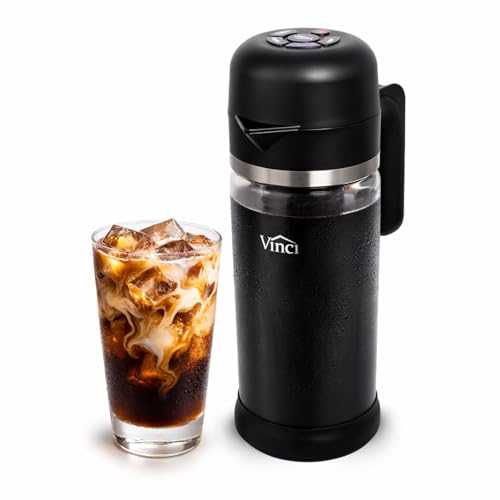

Who it’s for: Anyone who forgets to plan ahead.
Key specs: The Vinci Express is an electric cold brew maker in 1.4 L or 2.0 L sizes. It circulates room-temperature water through medium grounds, has adjustable strength settings and a clean cycle, and can brew in as little as 5 minutes. The OXO Rapid Brewer is manual and makes cold brew in 5 minutes or hot coffee in 2, producing 1–3 servings per press.
Pros:
- Coffee in minutes
- Vinci makes ready-to-drink strength
- Rapid Brewer needs no outlet
Cons:
- Vinci costs the most here
- Rapid Brewer needs an espresso-fine grind
Verdict: Get the Vinci for full pitchers and the OXO Rapid Brewer for one or two glasses.
Best for Travel: Takeya Deluxe Cold Brew Coffee Maker

Who it’s for: Office fridges, camping coolers and households with kids.
Key specs: The Takeya is in 1 qt or 2 qt sizes. It has a shatter-resistant Tritan body, an airtight lid and an ultra-fine mesh filter. The 1 qt model weighs 1.03 lb and stands 9.25″ tall.
Pros:
- Light and hard to break
- Dishwasher safe
- Fits a fridge door
Cons:
- No measurement markings
- Plastic picks up wear faster than glass
Verdict: It’s the pitcher you can throw in a bag without worrying. Measure your water separately.
Best Compact Glass Pitcher: Hario Mizudashi

Who it’s for: Small fridges and single drinkers.
Key specs: The Hario Mizudashi cold brew maker sells in 600 ml or 1,000 ml sizes. It pairs a borosilicate glass pot with a polyester mesh strainer and is made in Japan. The 1,000 ml model is 294 mm tall and just 94 mm deep.
Pros:
- Slim enough for a door shelf
- The polyester mesh rinses clean easily
- Grind finer for more body or coarser for a lighter cup
Cons:
- Glass breaks if you knock it from a cupboard
- Small batches
Verdict: The Hario Mizudashi is the tidiest small pitcher here. Buy two if you drink more than a glass a day.
Another Pitcher to Consider: Bean Envy Cold Brew Coffee Maker
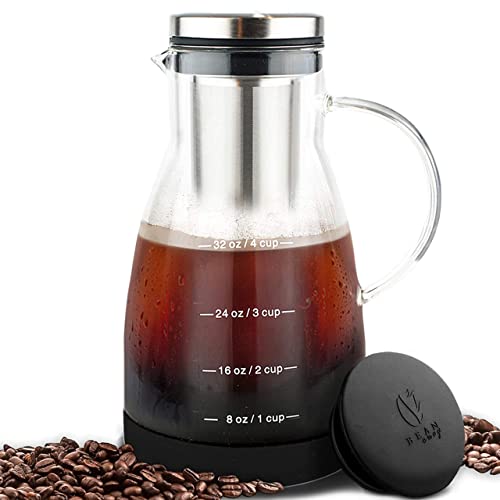
Who it’s for: Glass-pitcher fans who prefer a steel filter.
Key specs: The Bean Envy cold brew coffee maker pairs a borosilicate glass pitcher with a precision-cut stainless steel filter and makes up to 4 cups per batch in 12–24 hours. A lifetime warranty backs it.
Pros:
- Brew, store and serve in one vessel
- Steel filter lasts for years
- Lifetime warranty
Cons:
- Modest capacity
- Glass needs careful handling
Verdict: It’s a solid alternative to the Hario if you’d rather clean metal mesh than polyester.
How Do You Choose the Right Brewer for Your Kitchen?
Start with how much coffee you drink per week, then filter type, then fridge fit. Brewing method changes speed and texture, capacity sets how often you brew, and the filter decides how gritty the last sip gets.
How we chose: These picks come from comparing manufacturer specs (capacity, filter material, dimensions, price), published lab and editorial test results, and patterns in owner reviews. Owner complaints get as much weight as praise: drippy spouts, slow filters, flimsy handles and parts that are awkward to clean. We did not run our own hands-on brewing tests for this guide.
Immersion vs. Slow Drip vs. Electric: What Changes in the Cup?
Immersion brewers (OXO, Toddy, Filtron, KitchenAid and every pitcher here) soak grounds in water for 12–24 hours. They make the smooth, rounded, chocolatey cup most people mean by “cold brew,” and the long soak is forgiving if you’re off by an hour.
Slow-drip towers drip water through grounds one drop at a time. They produce a lighter, more tea-like coffee, but they’re tall, fussy and need dialing in, which is why none made this list for home use.
Electric models like the Vinci speed things up by moving water through the grounds. You trade some of the heavier body of a long steep for coffee in minutes. Manual pressure brewers like the OXO Rapid Brewer do something similar by pushing water through very fine grounds.
How Much Finished Coffee Does Each Capacity Produce?
Concentrate stretches further than you’d think. A typical serving is about 2 oz of concentrate topped up with 6 oz of water or milk at a 1:3 dilution. KitchenAid recommends exactly that 1 to 3 coffee-to-water ratio for its brewer.
| Concentrate made | Diluted 1:1 | Diluted 1:3 |
|---|---|---|
| 24 oz | 6 x 8 oz drinks | 12 x 8 oz drinks |
| 32 oz | 8 x 8 oz drinks | 16 x 8 oz drinks |
| 48 oz | 12 x 8 oz drinks | 24 x 8 oz drinks |
| 64 oz | 16 x 8 oz drinks | 32 x 8 oz drinks |
Pitchers that brew at drinking strength (Hario, Takeya and the Vinci on its milder settings) yield closer to their full volume in ready-to-drink cold brew, minus what the grounds soak up.
Paper, Felt, or a Reusable Metal Filter?
Felt gives the cleanest, silt-free concentrate. The catch is upkeep: you have to rinse it thoroughly, keep it damp in the fridge between uses and replace it periodically.
A reusable metal filter is the easiest to live with. Thicker stainless mesh holds back more fines than thin mesh, and a spoonful of sediment settling at the bottom of the jar is normal.
Paper adds a final polish. Use it as a liner in the OXO, Toddy or Filtron if grit bothers you, knowing it slows drainage and adds a small running cost. Polyester mesh, like the Hario’s, sits between metal and felt and rinses clean fast.
Which Materials, Handles, and Dimensions Work for Storage and Travel?
Glass holds no odors and looks nicer on the shelf, but it breaks. Tritan and other plastics survive drops and weigh less, though they scratch and wear sooner.
Measure your fridge before you buy. A door shelf takes something about 4–4.5″ deep, like the Takeya, Hario or County Line jar. Full-size drain-down systems need a main shelf for the decanter and counter space for the brewer.
Handles matter more than they look. A full 64 oz jar or the KitchenAid is heavy, so a solid grip or a bucket-style handle saves you from awkward two-handed lifts.
How Much Cleaning and Filter Replacement Will It Need?
Pitchers with a single insert are the quickest to clean. Dump the grounds in the trash, rinse the filter and put the vessel in the dishwasher if it’s rated for it (Takeya and County Line are).
Drain-down systems have more parts. The OXO comes apart and nests for storage, while the Toddy and Filtron need hand care for their felt. Filtron sells replacement pads at $7.50 for two and paper liners at $7.50 for 36. An electric cold brew maker like the Vinci adds a built-in clean cycle, but you still rinse the carafe and basket.
How Do You Make Better Cold Brew in Any Maker?
Coarse grounds, a measured ratio and a consistent steep improve cold brew in every maker on this list. Here’s how to set up each batch.
Which Coffee Beans and Grind Size Should You Use?
Use a coarse grind, about the size of raw sugar or a bit chunkier, for any immersion brewer. KitchenAid suggests settings 1–3 on its own burr grinder. Fine grounds clog mesh filters, slow drainage and make the cup muddy.
Speed brewers flip that rule. The Vinci calls for medium grounds, and the OXO Rapid Brewer needs an espresso-fine grind, so ask a café to grind beans for espresso if your grinder can’t go that fine. Find out more about using regular coffee grounds to make cold brew.
For beans, light and medium roasts keep more fruit and chocolate notes in cold brew. Dark roasts turn smoky and flat after a long steep. Fresh-roasted whole beans ground right before brewing taste noticeably brighter than a can that’s been open for a month.
Find your ideal coffee grinder for cold brew here
Coffee-to-Water Ratio and Steep Time Chart
Weigh your coffee if you can, since scoops vary a lot with grind size.
| Goal | Coffee | Water | Steep time |
|---|---|---|---|
| Strong concentrate | 1 oz (28 g) | 4–5 oz | 16–24 hrs, counter or fridge |
| Standard concentrate | 12 oz (340 g) | 2 L (68 oz) | 12–16 hrs |
| Ready-to-drink | 1 oz (28 g) | 8–10 oz | 12–16 hrs in fridge |
| Rapid or electric brewer | Follow maker’s dose | Follow maker | 2–10 minutes |
Steeping 24 hours gives deeper, more intense coffee, and 12 hours gives a lighter profile. Start at 16 hours, then adjust by a few hours per batch until it tastes right to you.
How Do You Filter and Dilute Your Batch?
- Pull the filter or start drainage as soon as steep time ends. Leaving grounds in longer pushes the flavor toward bitter.
- Let a drain-down brewer finish on its own. Squeezing or stirring the grounds pushes silt through.
- For a cleaner cup from a mesh pitcher, pour through a paper coffee filter once.
- Dilute concentrate at 1:1 for a strong glass or 1:3 for a mellow one, using water, milk or ice.
- For hot coffee, mix concentrate with hot water at the same ratios.
Dilute by the glass. Keeping the stash as concentrate saves fridge space and lets each person pour their own strength.
How Long Does Cold Brew Last in the Fridge?
Plan to drink cold brew within 7–10 days for the best flavor. Sealed concentrate holds longer than diluted coffee: KitchenAid and the OXO’s stoppered carafe are rated for up to two weeks, and Filtron claims up to four weeks for its concentrate.
Keep it in a sealed glass or Tritan container, not an open pitcher, since exposed coffee picks up fridge smells fast. Once you add milk, finish it the same day. If the coffee tastes sour, stale or papery, toss it and start a fresh batch.
Choose the Maker That Fits Your Weekly Coffee Routine
The OXO Good Grips is the cold brew coffee maker to get if you want clean concentrate without drips or grit. If budget comes first, the County Line Kitchen jar gives you 64 oz for about $25. Go with the Toddy or Filtron for a single weekly brew day, and the KitchenAid if you want a tap on your fridge shelf. The Vinci or OXO Rapid Brewer covers mornings when you forgot to plan.
For tight fridges, a slim cold brew pitcher like the Hario Mizudashi or Takeya keeps cold brew at home simple. Whichever you choose, start with a coarse grind and a 16-hour steep, then dilute 1:1. Adjust one variable per batch until the glass tastes right.
Frequently Asked Questions
What is the difference between cold brew and iced coffee?
Cold brew steeps in cold or room-temperature water for 12–24 hours, while iced coffee is hot-brewed coffee poured over ice. Cold brew tastes smoother and less acidic. Iced coffee keeps more brightness, and a regular iced coffee maker produces it in minutes.
Should I steep cold brew on the counter or in the fridge?
Both work. Counter steeping at room temperature extracts a bit faster and saves fridge space, which is why the OXO is designed for it. Fridge steeping takes a few hours longer but gives a slightly gentler cup and means you never have to remember to move the batch.
Can I use a French press instead of buying a cold brew maker?
Yes. Add coarse grounds and cold water, steep overnight, then press slowly and pour through a paper filter to catch the fines. A dedicated cold brew coffee maker mainly adds larger capacity, better filtration and a sealed container for storage.
Can one coffee maker make both hot coffee and cold brew?
Yes. The OXO Rapid Brewer makes hot coffee in about 2 minutes and cold brew in about 5. Any concentrate from an immersion brewer also turns into hot coffee when you mix it with hot water.
Do I need a different machine to make nitro cold brew?
Yes. Nitro cold brew needs nitrogen infusion, usually from a whipped-cream-style canister with nitrogen cartridges or a dedicated nitro dispenser. You can brew the base concentrate in any maker on this list and charge it afterward.